Ideas & inspiration
Floating Shelves Installation Guide UK 2025: Complete DIY & Professional Guide
Complete guide to floating shelves installation in the UK for 2025. Learn about wall types, fixings, weight limits, tools needed, and professional installation techniques.
In brief
Complete guide to floating shelves installation in the UK for 2025. Learn about wall types, fixings, weight limits, tools needed, and professional installation techniques.
In this guide
Floating Shelves Installation Guide UK 2025
Floating shelves provide an elegant storage solution that maximizes wall space while maintaining a clean, minimalist aesthetic. Whether you're looking to display books, decorative items, or create practical storage in kitchens and bathrooms, proper installation is crucial for both safety and appearance. This comprehensive guide covers everything from choosing the right shelves and fixings to mastering installation techniques for different wall types.
Understanding wall construction, weight limits, and fixing methods will help you create secure, professional-looking installations that stand the test of time. We'll walk you through the entire process, helping you avoid common mistakes and achieve perfect results.
Quick Reference Guide:
- Solid walls: Use wall plugs and screws for secure fixing
- Hollow walls: Require specialized cavity fixings
- Weight limits: 10-50kg+ depending on wall and fixings
- Shelf spacing: 300-400mm apart for books/storage
- Installation cost: £20-£80 per shelf professionally fitted
Types of Floating Shelves
Construction Methods
Concealed Bracket Shelves:
- Hidden support: Brackets concealed within shelf
- Clean appearance: No visible fixing hardware
- Weight capacity: 15-30kg typical load capacity
- Installation: Precise alignment essential
- Cost: £15-£60 per shelf
Invisible Bracket Systems:
- French cleat system: Wall cleat engages shelf cleat
- High capacity: 20-50kg+ load capacity
- Adjustable: Easy removal and repositioning
- Professional appearance: Completely hidden fixings
- Cost: £25-£80 per shelf
Cantilever Shelves:
- Single support point: Wall-mounted cantilever arm
- Modern aesthetic: Contemporary architectural appearance
- Limited capacity: 5-15kg typical
- Structural consideration: Requires strong wall attachment
Material Options
Solid Wood Shelves:
- Oak shelves: £20-£60 per shelf
- Pine shelves: £8-£25 per shelf
- Walnut shelves: £30-£80 per shelf
- Beech shelves: £15-£40 per shelf
- Natural beauty: Grain patterns and warmth
- Maintenance: Periodic oiling or waxing required
Engineered Materials:
- MDF shelves: £5-£20 per shelf
- Plywood shelves: £10-£30 per shelf
- Laminated chipboard: £8-£25 per shelf
- Cost effective: Lower price than solid wood
- Consistent quality: No natural defects
Alternative Materials:
- Glass shelves: £15-£50 per shelf
- Metal shelves: £20-£60 per shelf
- Stone/composite: £30-£100+ per shelf
- Acrylic shelves: £25-£70 per shelf
Wall Types and Construction
Solid Masonry Walls
Brick Walls:
- Construction: Solid brick or cavity brick construction
- Fixing method: Wall plugs and screws
- Weight capacity: High - 30-50kg+ per shelf
- Drilling: Masonry drill bits required
- Considerations: Avoid mortar joints for fixing
Concrete/Block Walls:
- Construction: Dense concrete or concrete block
- Fixing method: Heavy-duty wall plugs
- Weight capacity: Very high - 40-60kg+ per shelf
- Drilling: SDS drill recommended for efficiency
- Dust control: Significant dust generation
Hollow Wall Construction
Stud Partition Walls:
- Construction: Timber or metal frame with plasterboard
- Stud fixing: Directly into wooden studs (best method)
- Cavity fixing: Specialized hollow wall fixings
- Weight capacity: Varies 5-30kg depending on fixing method
- Stud detection: Electronic stud finder essential
Plasterboard Walls:
- 9.5mm plasterboard: Light loads only (under 10kg)
- 12.5mm plasterboard: Medium loads (10-20kg with correct fixings)
- Double layer: Enhanced load capacity
- Fixing options: Various cavity fixings available
Fixing Methods and Hardware
Solid Wall Fixings
Wall Plugs and Screws:
- Rawl plugs: Standard brown plugs for general use
- Fischer plugs: Premium expanding plugs
- Screw size: 6-8mm diameter for shelf fixings
- Plug length: 40-60mm for secure fixing
- Load capacity: 25-40kg per fixing point
Chemical Anchors:
- Resin cartridge systems: Chemical fixing method
- High load capacity: 50-100kg+ per fixing
- Permanent installation: Very difficult to remove
- Professional use: Complex installation procedure
Hollow Wall Fixings
Spring Toggle Fixings:
- Mechanism: Spring-loaded toggle opens behind wall
- Load capacity: 15-25kg per fixing
- Installation: Drill hole, insert toggle, tighten
- Removal: Toggle falls into cavity when removed
- Cost: £0.50-£2 per fixing
Metal Expanding Anchors:
- Mechanism: Metal sleeve expands behind plasterboard
- Load capacity: 10-20kg per fixing
- Reusable: Can be removed and reused
- Precise fit: Must match wall thickness
Self-Drilling Anchors:
- Installation: Drill directly through plasterboard
- Quick fitting: No pre-drilling required
- Load capacity: 8-15kg per fixing
- Ideal for: Light to medium weight shelves
Planning and Design
Shelf Positioning
Height Considerations:
- Standard height: 1500-1800mm for display shelves
- Kitchen shelves: 500-700mm above worktop
- Bathroom shelves: 1200-1600mm above floor
- Children's rooms: 900-1200mm for accessibility
- Book shelves: 800-2000mm range for easy access
Spacing Guidelines:
- Book storage: 300-350mm vertical spacing
- Display items: 400-600mm spacing
- Kitchen items: 300-400mm for practical access
- Bathroom storage: 250-400mm for toiletries
Load Calculations
Weight Assessment:
- Books: 15-25kg per linear meter of shelf
- Ceramics/ornaments: 5-15kg per shelf typical
- Kitchen items: 10-30kg for dishes/food storage
- Bathroom items: 3-10kg for toiletries
- Safety factor: Design for 2x expected load
Tools and Materials
Essential Tools
Drilling Equipment:
- Drill/driver: Combi drill with hammer action
- Masonry bits: 6mm, 8mm, 10mm common sizes
- Wood/metal bits: For stud drilling
- SDS drill: For heavy-duty masonry work
- Dust sheets: Protect surrounding areas
Measuring and Marking:
- Spirit level: 600-1200mm length minimum
- Measuring tape: 5m minimum length
- Pencil: For marking fixing positions
- Stud detector: For locating wall studs
- Awl or center punch: For marking drill points
Installation Tools:
- Screwdrivers: Various sizes for fixings
- Socket set: For hex-head fixings
- Hammer: For wall plug installation
- Pliers: For handling fixings
Materials Checklist
- Floating shelves: Appropriate size and material
- Fixing hardware: Brackets, screws, wall plugs
- Wall plugs: Correct type for wall construction
- Screws: Appropriate length and gauge
- Spirit level: For accurate installation
- Protective equipment: Safety glasses, dust mask
Installation Process
Site Preparation
Area Assessment:
- Check wall condition: Sound, level, suitable for fixing
- Locate services: Avoid electrical cables and pipes
- Identify wall type: Solid, hollow, stud locations
- Plan layout: Mark shelf positions accurately
- Protect surroundings: Dust sheets and coverings
Marking and Drilling
Marking Process:
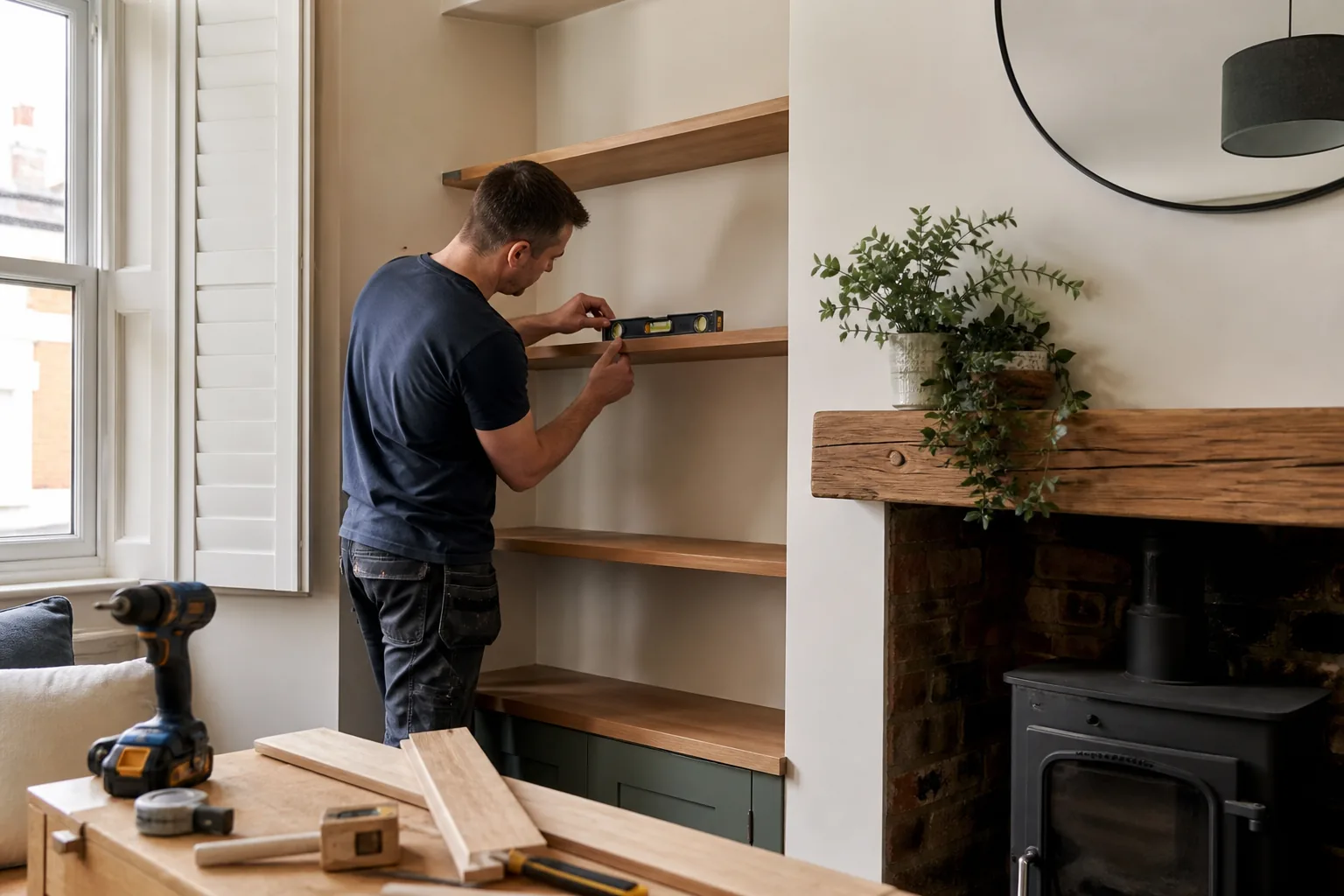
- Mark first shelf position: Use level for horizontal reference
- Mark fixing points: Follow manufacturer's bracket spacing
- Check with level: Ensure perfectly horizontal
- Mark additional shelves: Use consistent spacing
- Double-check measurements: Verify all positions
Drilling Technique:
- Pilot holes: Use small bit to start holes accurately
- Steady pressure: Let drill do the work, don't force
- Correct depth: Match wall plug length
- Clean holes: Blow out dust and debris
- Test fit: Wall plugs should fit snugly
Bracket Installation
Solid Wall Installation:
- Insert wall plugs: Tap flush with wall surface
- Position bracket: Align with drilled holes
- Insert screws: Don't fully tighten initially
- Check level: Adjust bracket position if needed
- Final tightening: Secure brackets firmly
Hollow Wall Installation:
- Select appropriate fixings: Match wall thickness and load
- Drill pilot holes: Correct size for cavity fixings
- Insert fixings: Follow manufacturer's instructions
- Test security: Gentle pull test before loading
- Install brackets: Ensure level and secure
Shelf Mounting
Concealed Bracket Systems
Mounting Process:
- Prepare shelf: Ensure bracket channels are clear
- Align with brackets: Careful positioning required
- Slide onto brackets: Firm, even pressure
- Check security: Ensure shelf is fully engaged
- Test load: Gradual loading to verify capacity
Adjustable Systems
Fine-tuning Installation:
- Level adjustment: Use built-in leveling screws
- Position adjustment: Front-to-back positioning
- Height variation: Accommodate wall irregularities
- Gap management: Consistent wall-to-shelf spacing
Common Installation Challenges
Wall Issues
Uneven Walls:
- Problem: Shelves don't sit flush against wall
- Solutions: Adjustable brackets, packing pieces
- Shimming: Thin packers behind brackets
- Flexible mounting: Accommodate minor variations
Weak Wall Construction:
- Problem: Inadequate load capacity
- Solutions: Distribute load over multiple fixings
- Reinforcement: Add backing boards or battens
- Alternative methods: Floor-to-ceiling support systems
Installation Errors
Misaligned Brackets:
- Prevention: Careful measuring and marking
- Detection: Shelf won't fit or sits unevenly
- Correction: Re-drill or use adjustable brackets
- Avoid: Don't force misaligned shelves
Weight Limits and Safety
Load Capacity Guidelines
Solid Wall Installations:
- Standard brackets: 20-30kg per shelf
- Heavy-duty brackets: 40-60kg per shelf
- Multiple fixings: Distribute load across brackets
- Safety margin: Design for 1.5-2x expected load
Hollow Wall Installations:
- Cavity fixings: 8-20kg per shelf typical
- Stud fixings: 25-40kg per shelf
- Combined methods: Some fixings to studs, some cavity
- Conservative approach: Use lower load ratings
Safety Considerations
- Regular inspection: Check fixings periodically
- Load distribution: Spread weight evenly across shelf
- Child safety: Secure heavy items, consider heights
- Overloading signs: Bracket flexing, wall cracks
Maintenance and Adjustments
Routine Maintenance
- Bracket inspection: Check for looseness quarterly
- Wall monitoring: Look for cracks or damage
- Load assessment: Ensure weight limits respected
- Cleaning access: Easy maintenance of shelf areas
Adjustments and Repairs
- Re-tightening: Periodic screw tightening
- Realignment: Correcting sagging or movement
- Fixing replacement: Upgrading worn fixings
- Load redistribution: Reorganizing shelf contents
Cost Analysis
Material Costs (2025 UK Prices)
DIY Installation Costs:
- Basic wooden shelves: £5-£25 each
- Quality wooden shelves: £15-£60 each
- Concealed brackets: £10-£30 per shelf
- Wall fixings: £2-£8 per shelf
- Total per shelf: £20-£100 DIY
Professional Installation:
- Labor cost: £30-£60 per hour
- Installation time: 30-90 minutes per shelf
- Total professional cost: £50-£150 per shelf
- Multiple shelf discounts: Reduced per-shelf costs
Professional vs DIY Installation
DIY Suitable Projects
- Simple installations: Standard solid walls
- Light loads: Display items, books
- Standard heights: Normal reach installation
- Basic tools available: Drill, level, measuring tools
Consider Professional Installation
- Heavy loads: Kitchen storage, heavy books
- Complex walls: Unusual construction or materials
- High installations: Above normal reach height
- Multiple shelf projects: Extensive installation work
- Warranty requirements: Professional installation guarantees
Getting Professional Installation
When planning floating shelf installation, professional services can ensure optimal results, especially for complex installations or heavy-duty applications.
What Should Professional Services Include?
- Site survey and wall assessment
- Load calculation and fixing specification
- Shelf supply or supply guidance
- Professional installation with appropriate fixings
- Level and alignment guarantee
- Load testing and safety verification
- Installation warranty and aftercare
- Cleanup and disposal of packaging
Professional installers can assess your specific wall construction, recommend appropriate shelving systems, and ensure safe, secure installation that meets your storage needs.
Installation Checklist
Pre-Installation
- Assess wall type and construction method
- Calculate load requirements and shelf spacing
- Select appropriate shelves and fixing systems
- Gather all necessary tools and materials
- Check for hidden services in wall
- Plan installation sequence and layout
During Installation
- Mark positions accurately using spirit level
- Drill pilot holes to correct depth
- Install fixings according to manufacturer instructions
- Test bracket security before mounting shelves
- Check alignment and level at each stage
Post-Installation
- Test each shelf with expected load
- Check all fixings are secure and tight
- Verify shelves are level and properly aligned
- Clean up installation area thoroughly
- Document installation details for future reference
Frequently Asked Questions
How much weight can floating shelves hold?
Weight capacity depends on wall type and fixings. Solid walls can support 30-50kg per shelf, while hollow walls typically support 10-25kg per shelf with appropriate cavity fixings.
Can I install floating shelves on any wall?
Most walls can support floating shelves, but plasterboard-only walls have limited capacity. Always use appropriate fixings for your specific wall construction.
How far apart should floating shelves be?
Spacing depends on usage: 300-400mm for books, 400-600mm for display items, and 250-400mm for bathroom storage. Consider both function and appearance.
Do I need special tools to install floating shelves?
Basic DIY tools suffice: drill, drill bits, spirit level, measuring tape, and screwdrivers. A stud detector is helpful for hollow wall installations.
How do I make sure floating shelves are level?
Use a quality spirit level for marking and installation. Mark the first bracket position, then use the level to mark all subsequent positions accurately.
Can floating shelves be removed easily?
Most floating shelves can be removed, though some systems are easier than others. French cleat systems offer the easiest removal and repositioning.
What's the best height for floating shelves?
Standard height is 1500-1800mm for display shelves, but consider the room function: kitchen shelves 500-700mm above counters, bathroom shelves 1200-1600mm from floor.
Should I hire a professional for floating shelf installation?
Consider professionals for heavy-duty installations, complex wall types, or when installing multiple shelves. Simple, light-duty installations are suitable for competent DIYers.